If you’d like to submit audio, field recordings, archival material, or have an idea for a collaboration, please get in touch!
A monthly open-form radio series that progresses through live electronics, field recordings, and archival fragments. The title emerges from waves that remain imperceptible even as they are heard and felt. The series follows these signals as forms of vibration moving through aetheric conditions in bodies, environments, and infrastructural systems. Each episode moves between sonic essay, radio play, and live composition, tracing rupture, resistance, and repair within border zones, technological networks, and contested terrains.   
Invisible Signals contact
Next broadcast: Thursday 26.11.2026 at 16:30 (London)
--d --h --m --s
Waiting Room Listen to Resonance FM
Episode 01
Invisible Signals is a monthly open-form radio series that traverses archival fragments, field recordings, and sonic atmospheres to examine the material and affective dimensions of imperceptible infrastructures. This episode focuses on the recent occupation at Goldsmiths, University of London, situating conversations with student organisers within broader conditions of austerity, institutional rupture, and the marketisation of higher education. The radio montage approaches occupation as both a spatial and acoustic intervention: a collective refusal against the erosion of critical pedagogy, artistic practice, and public education. The first episode of the series asks how acts of resistance generate provisional spaces for repair, solidarity, and the reimagining of social and educational futures. Show your support at freegoldsmiths. Presented by artist and researcher Florence To.
Episode 01 visual Episode 01 visual
Episode 02

Voices travel through resonant architectures. Forms of relation become intuitive, and I find myself speaking back, feeling that something is being communicated, even if neither of us fully understands the other. They sing while I edit field recordings. They become animated when I push sounds through control voltage and distort samples beyond recognition. Over time, these encounters have become part of my listening practice.

The second episode of Invisible Signals lingers with the timbre of bird calls and the ways they move in and out of field recordings, distant rhythms, and passing atmospheres, gathering associations as they travel. Through memory, through migration, through places that no longer exist in the same way. Aerial utterances carry their own patterns of movement and relation. Listening drifts, shifting emotional landscapes, allowing calls and rhythms to morph into new constellations of attraction. These movements and frictions become a means of inhabiting the space between listening and recognition, where meaning drifts between presence and absence.

Episode 02 visual Episode 02 visual
Episode 03
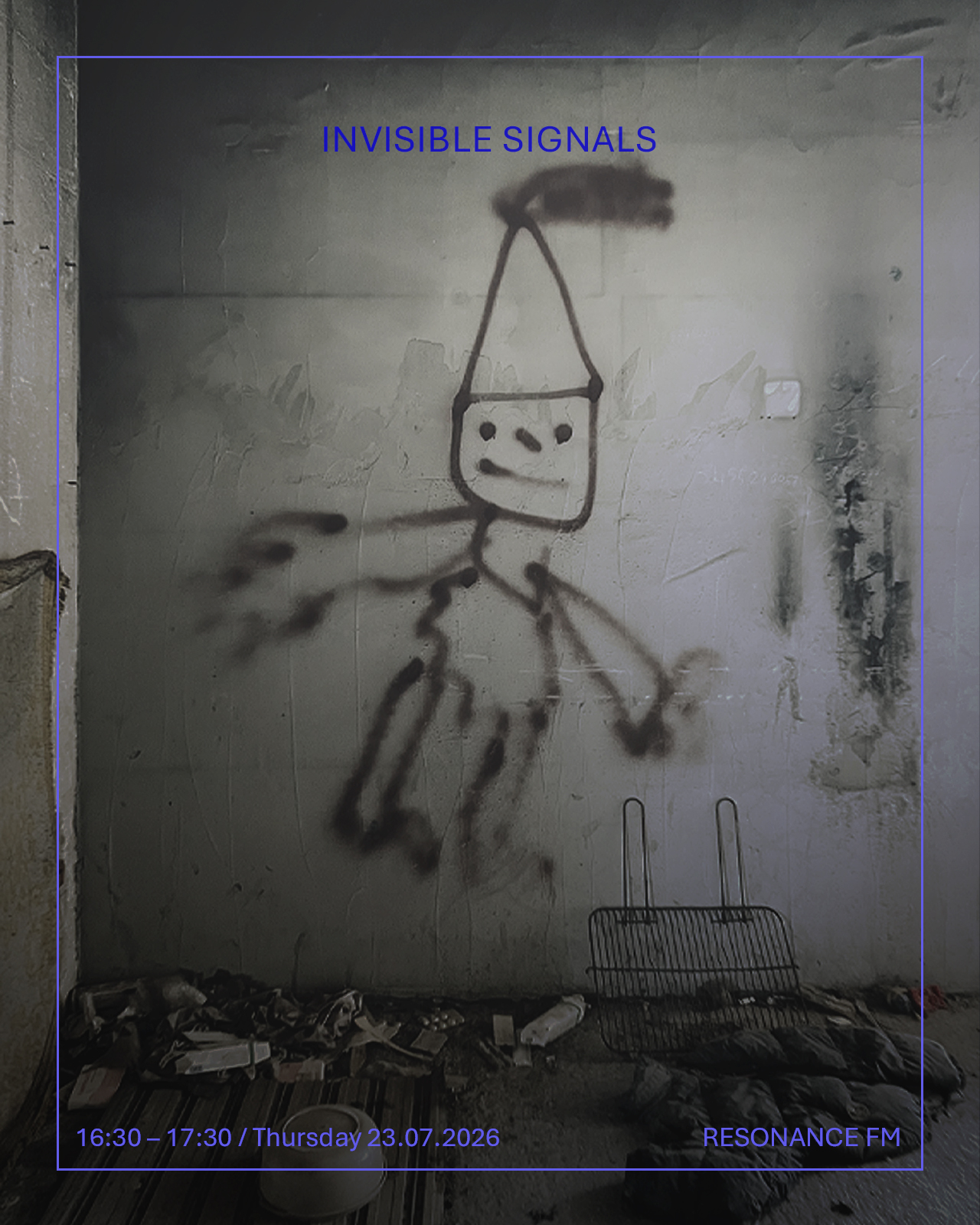
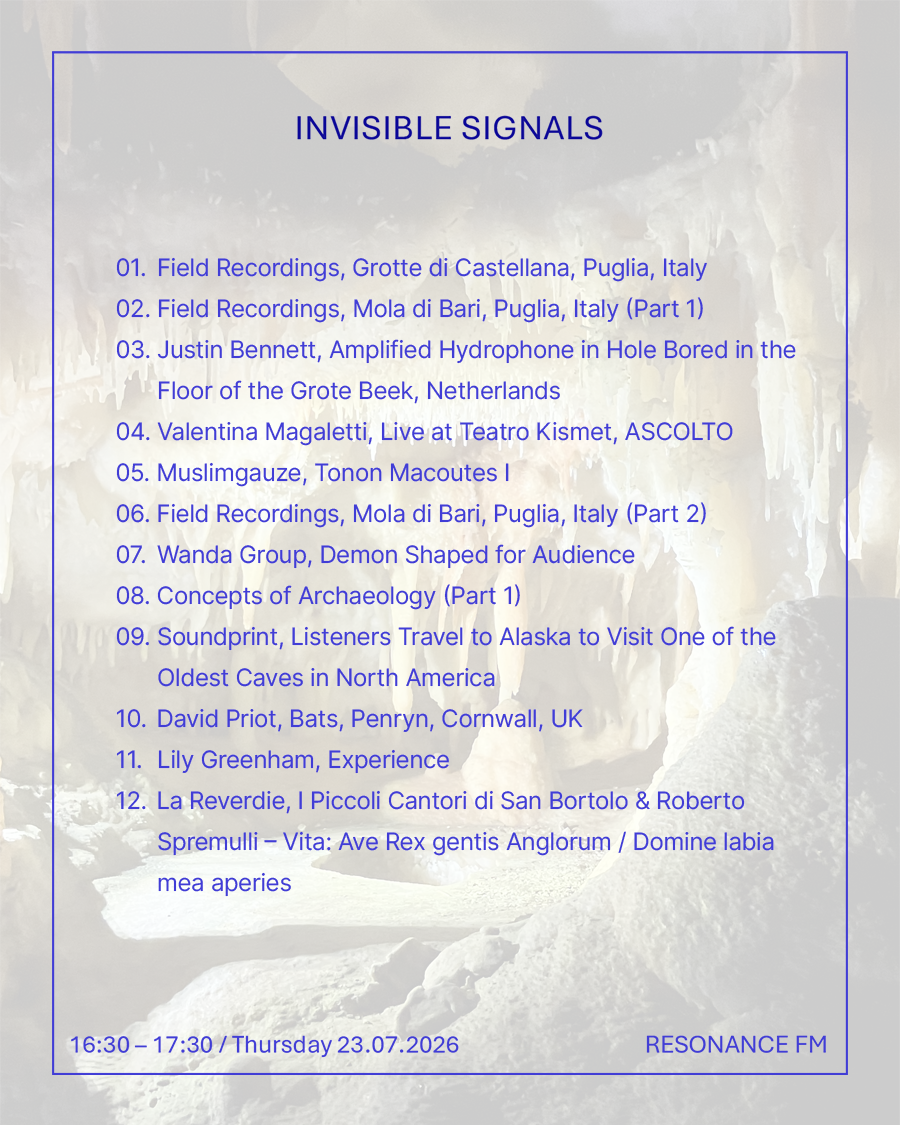
This episode takes place during a recent trip to Puglia, moving through coastal landscapes, unfinished architectures, and the underground chambers of the Grotte di Castellana. The caves were formed over millions of years by water and mineral deposits, while structures along the coast were abandoned before they were ever completed. Both remain open to new forms of inhabitation. I recorded sounds through walking and curiosity, and along these paths were traces of temporary shelter, lives shaped by precarity and addiction, distant voices carried from the sea, and encounters that revealed the paradoxes held within the same landscape. Inside the caves, darkness reshaped perception. Bats occupied the spaces above while stalactites and stalagmites continued their slow formation. The descent underground, the enclosed atmosphere, and the weight of the summer heat altered my sense of orientation. The body began to listen differently. This episode brings together those field recordings with archival and archaeological fragments, allowing sounds to move between geological time, abandoned architectures, and the lives that continue to inhabit them.
Episode 03 visual Episode 03 visual
Episode 04
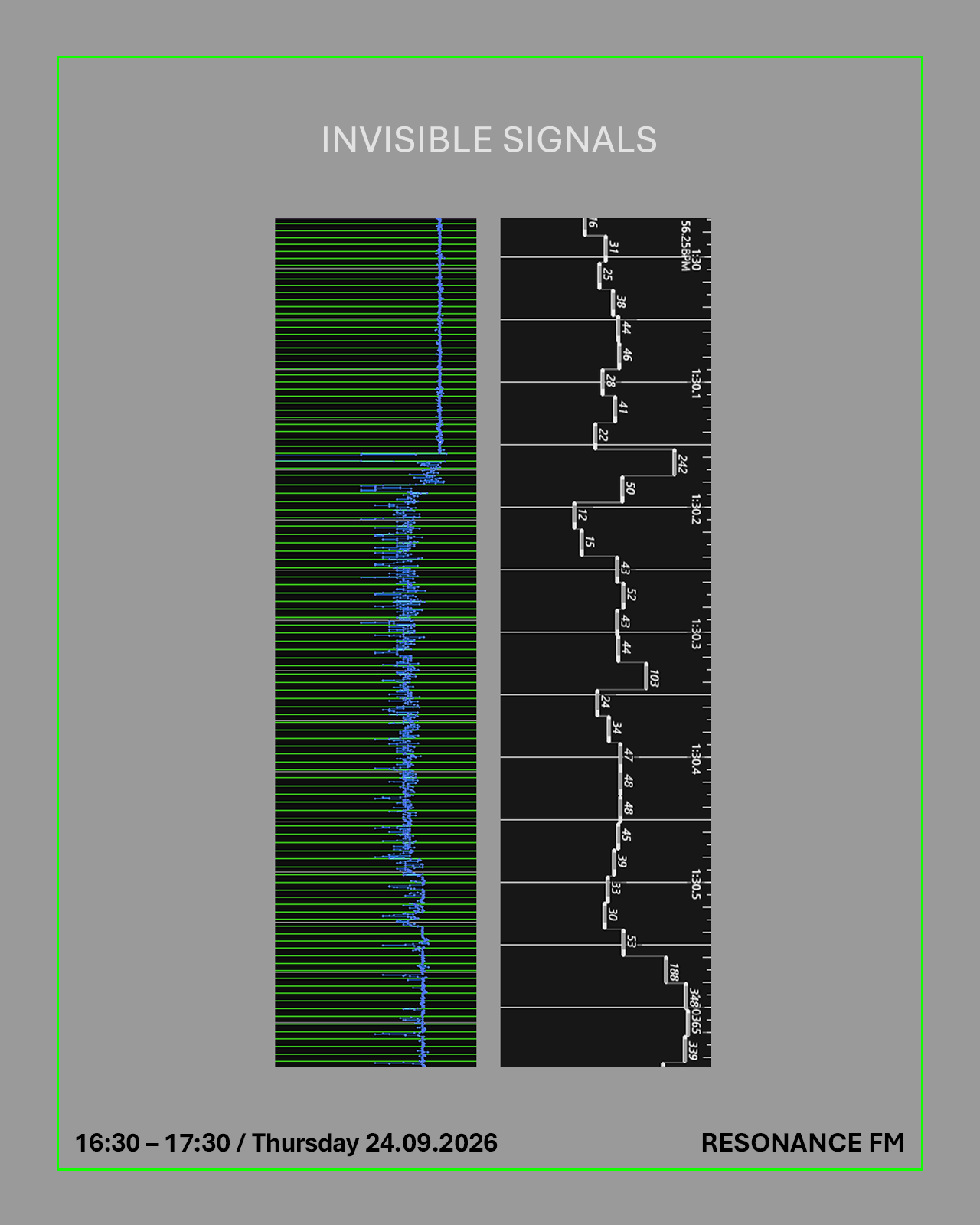
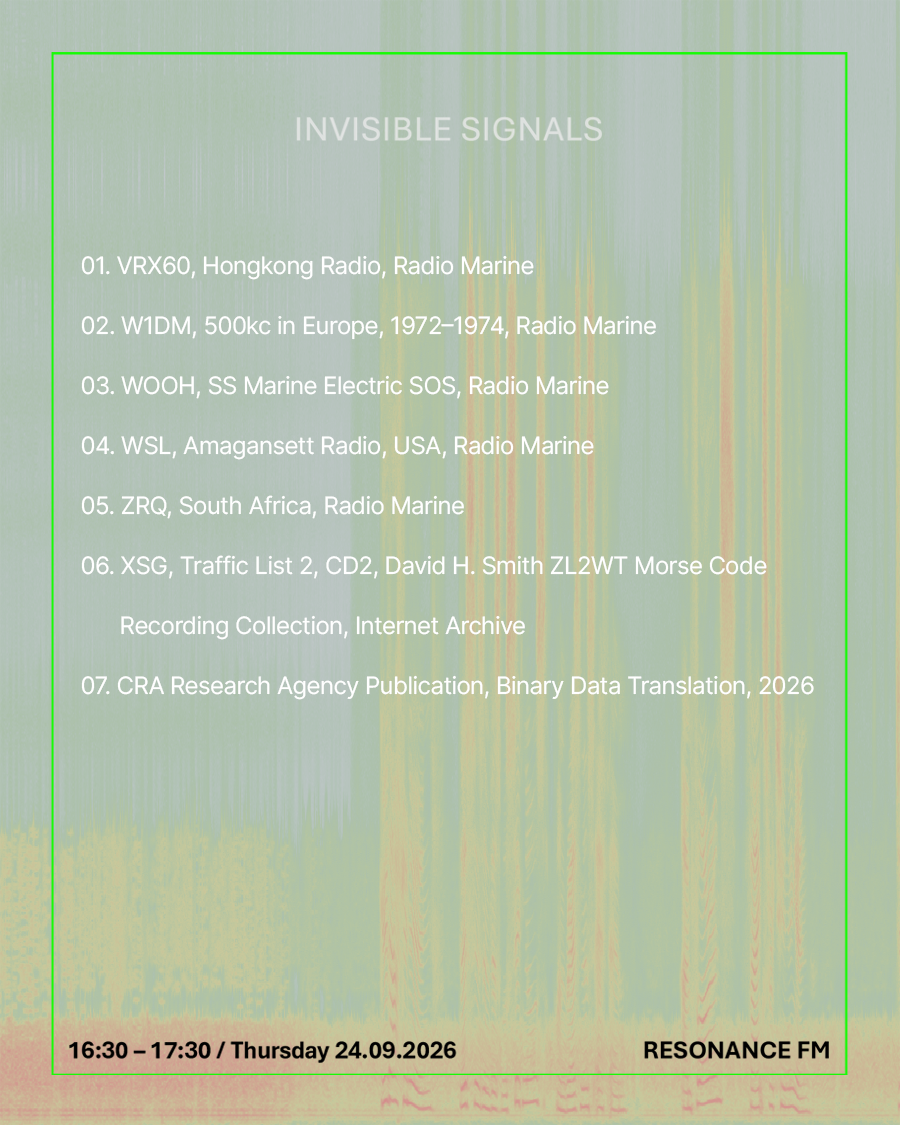
Across distance, telegraphic signalling turns language into duration and interval, carrying meaning through pulses that may be received, interrupted or lost. This episode of Invisible Signals features archival Morse code transmissions, maritime distress calls and the final broadcasts of radio stations across different geographies. Alongside these recordings, selected segments from the Research Agency publication, developed by Master’s students at the Centre for Research Architecture, are translated into a customised notation responding to the publication’s different curatorial pathways. The episode coincides with the Centre for Research Architecture Public Forum, opening this Thursday at St James Hatcham Church, Goldsmiths, and running until 2 October. Please come down to see the works, the full publication, and the activations and events developed by this year’s cohort.
Episode 04 visual Episode 04 visual
Episode 05

This edition of Invisible Signals examines the relationship between sound, behaviour and computational logic through archival recordings of early computer music, arcade environments and interactive gaming systems. Algorithmic compositions, electronic signals and responsive musical environments reveal how sonic expression is shaped by decisions and their consequences. Sound communicates instructions, registers errors, rewards actions and signals changes in the environment. Within arcades, overlapping game sounds, mechanical movements and human activity create shared acoustic environments, where individual actions contribute to a continuous exchange of signals. Through repetition, these sounds become familiar, forming memories that influence how players anticipate, navigate and respond to a system. Experimentation develops an intuitive understanding of the machine, even when its internal operations remain inaccessible.

The programme combines fragments of historical broadcasts, gameplay recordings and electronic compositions, including Laurie Spiegel’s Music Mouse and Masaya Matsuura’s Vib-Ribbon. These recordings preserve traces of earlier technologies and the conditions through which sound was generated, while the original interactions are often only partially accessible. Programmed structures establish limits on behaviour, yet players and composers find ways to manipulate, reinterpret or work against their intended functions.

How do the sonic environments of technology-mediated play and interaction shape our physical responses, memories and understanding of the systems we engage with?
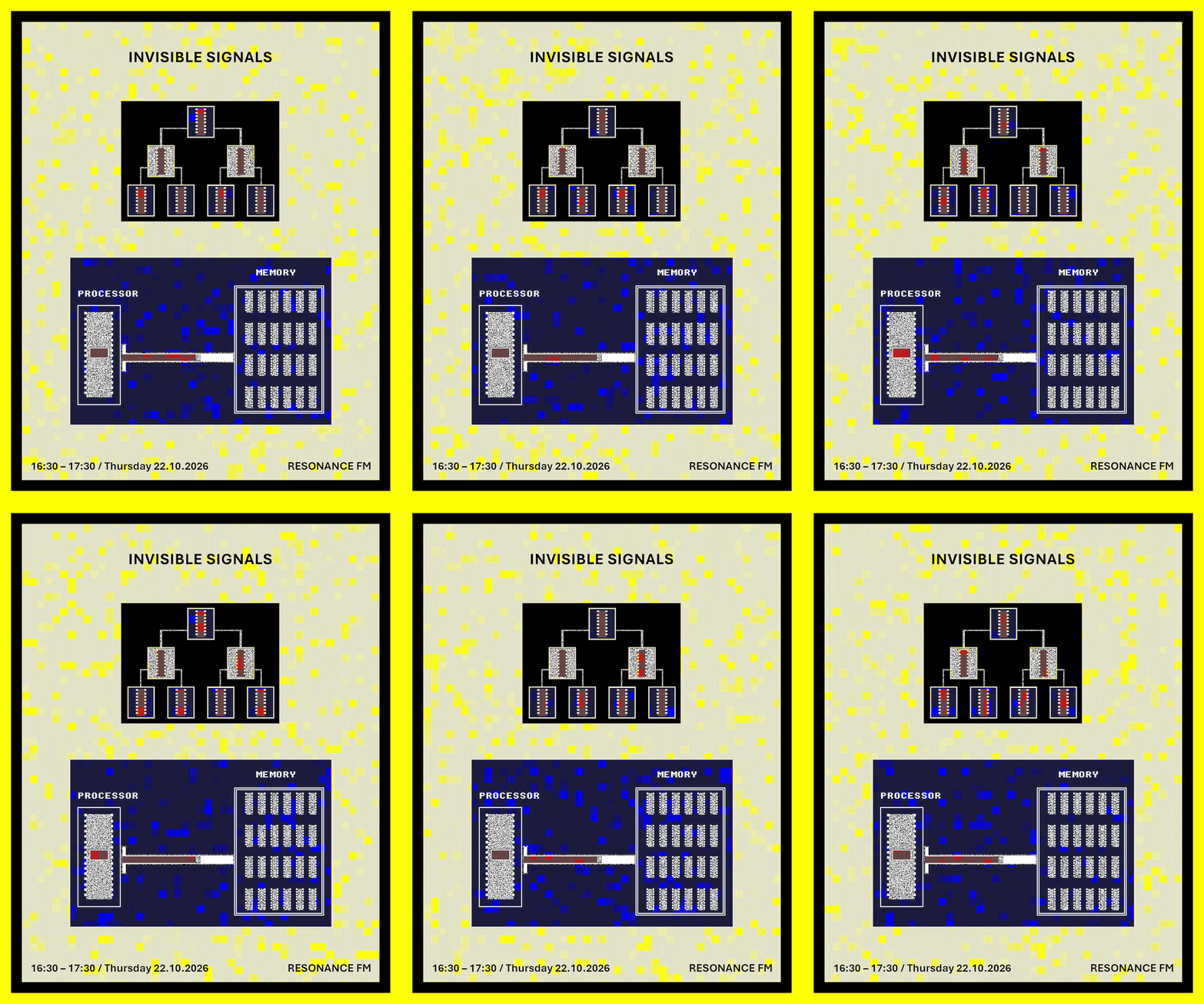
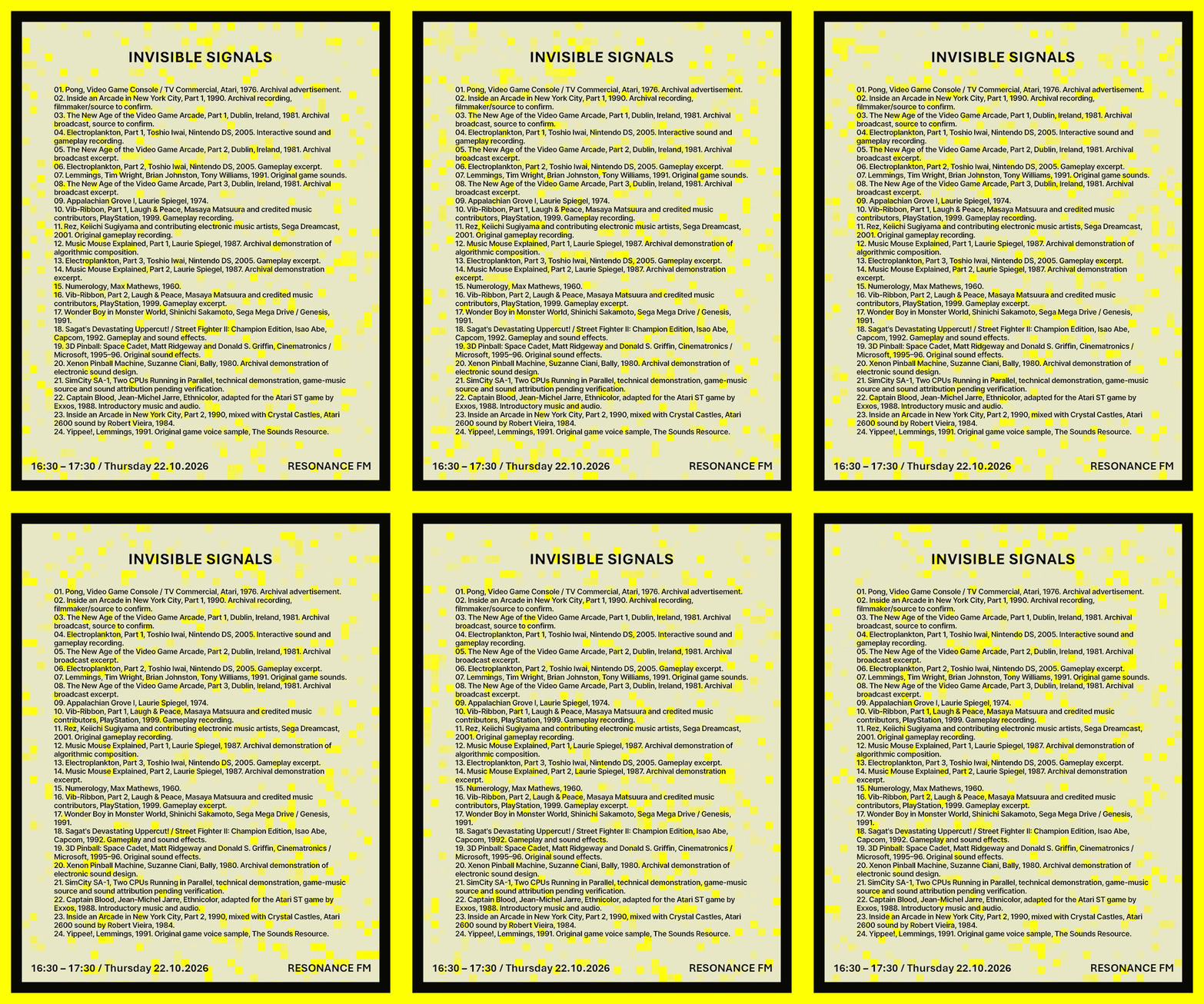
Episode 05 visual Episode 05 track list
Episode 06
Details for this episode will be announced soon.
Coming 2026