Voices travel through resonant architectures. Forms of relation become intuitive, and I find myself speaking back, feeling that something is being communicated, even if neither of us fully understands the other. They sing while I edit field recordings. They become animated when I push sounds through control voltage and distort samples beyond recognition. Over time, these encounters have become part of my listening practice.
The second episode of Invisible Signals lingers with the timbre of bird calls and the ways they move in and out of field recordings, distant rhythms, and passing atmospheres, gathering associations as they travel. Through memory, through migration, through places that no longer exist in the same way. Aerial utterances carry their own patterns of movement and relation. Listening drifts, shifting emotional landscapes, allowing calls and rhythms to morph into new constellations of attraction. These movements and frictions become a means of inhabiting the space between listening and recognition, where meaning drifts between presence and absence.


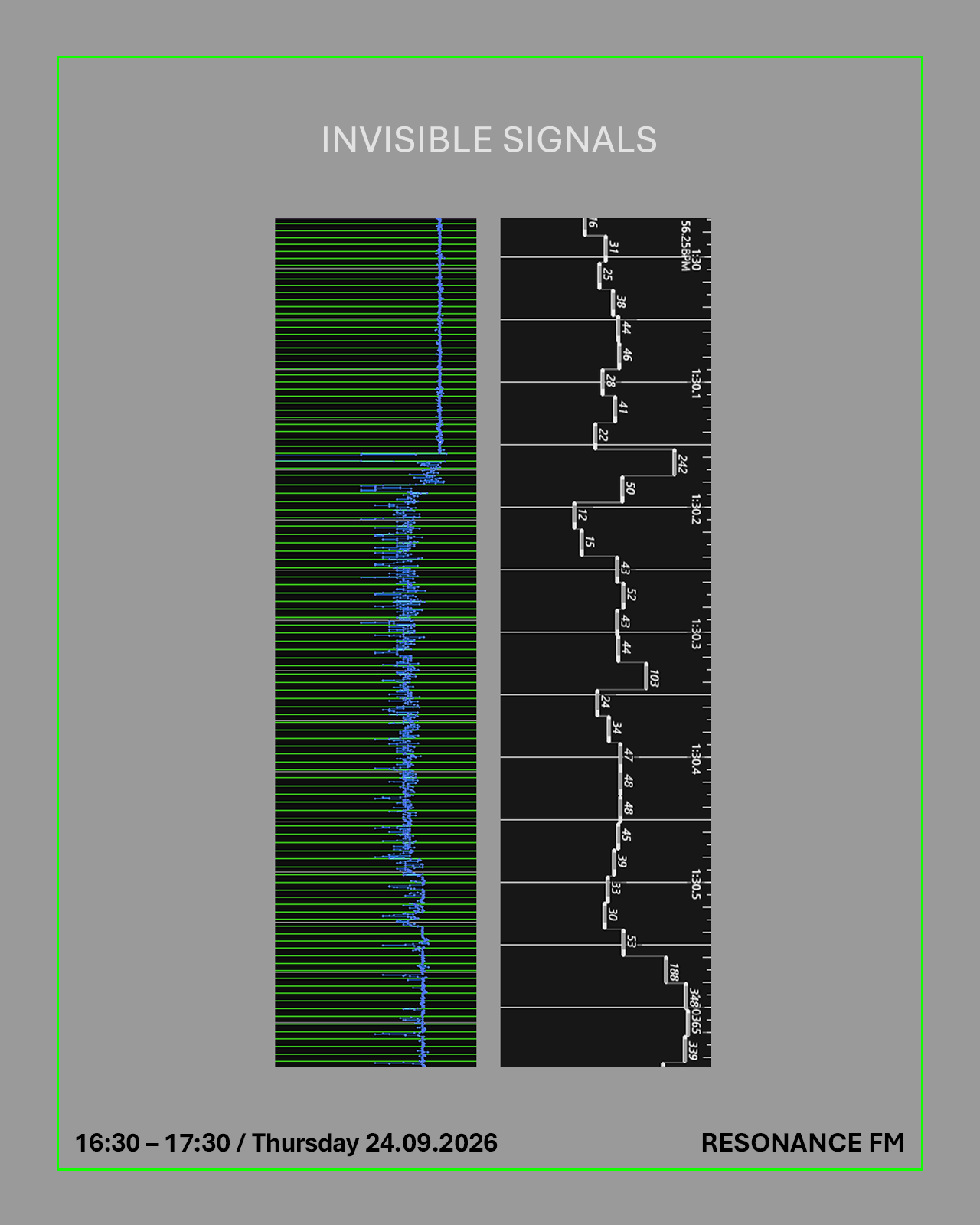
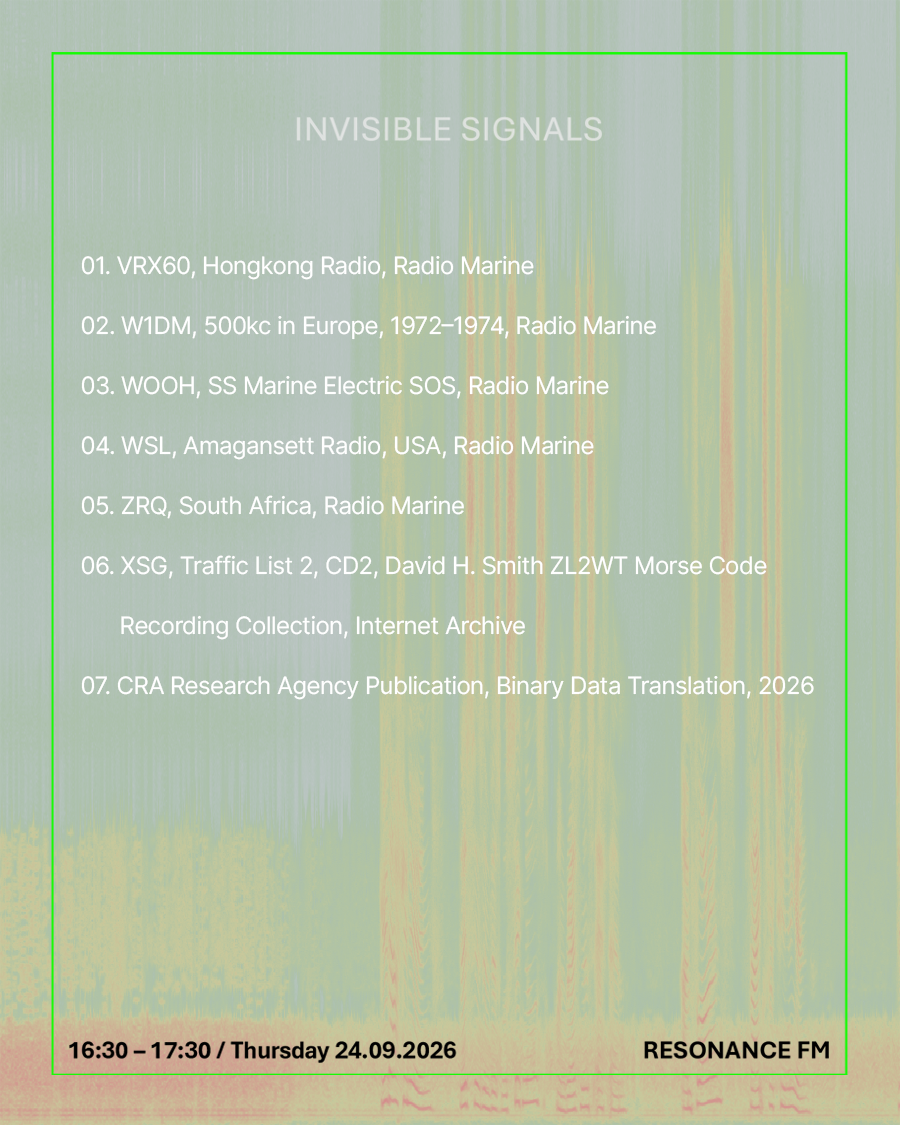
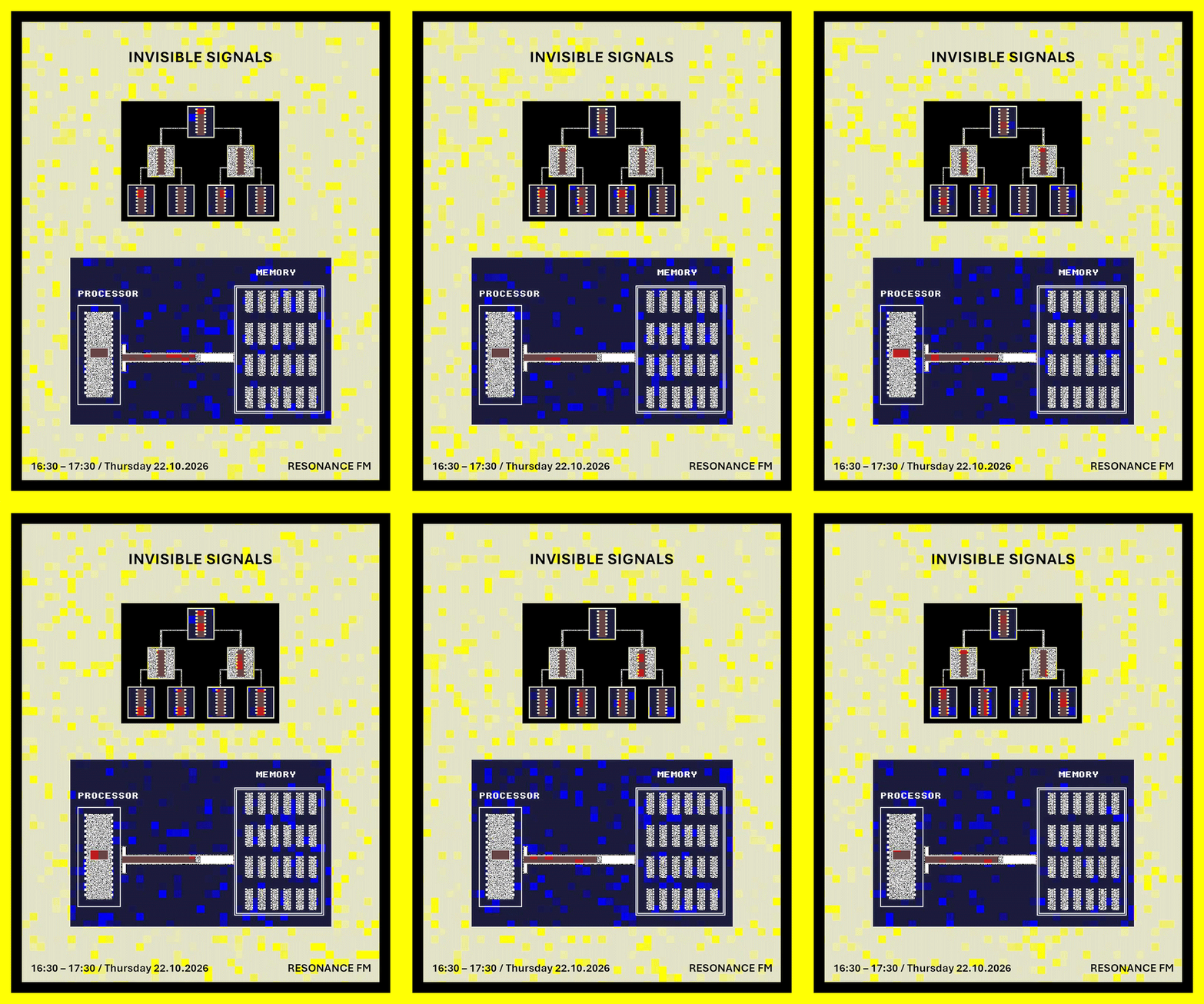
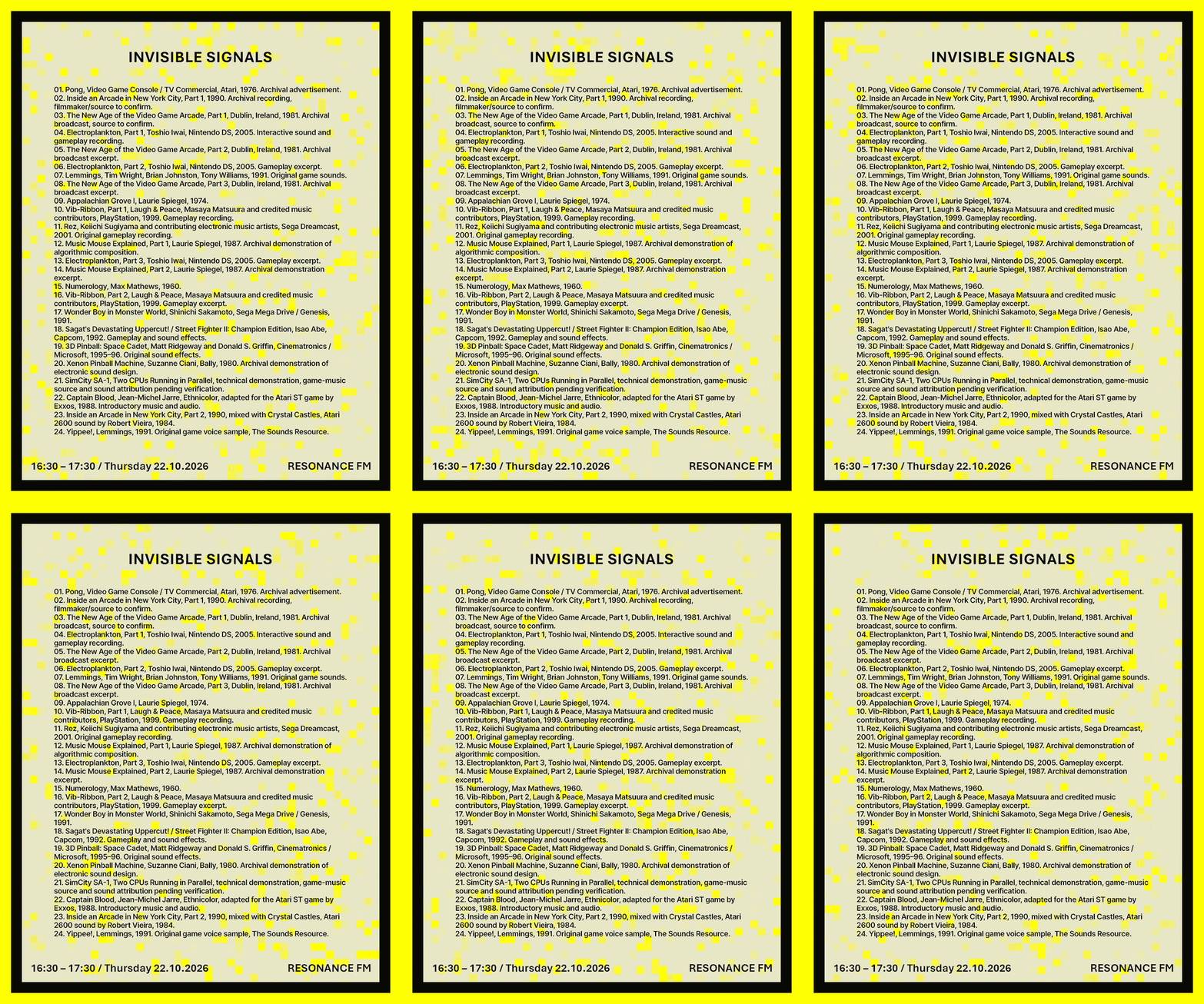
This edition of Invisible Signals examines the relationship between sound, behaviour and computational logic through archival recordings of early computer music, arcade environments and interactive gaming systems. Algorithmic compositions, electronic signals and responsive musical environments reveal how sonic expression is shaped by decisions and their consequences. Sound communicates instructions, registers errors, rewards actions and signals changes in the environment. Within arcades, overlapping game sounds, mechanical movements and human activity create shared acoustic environments, where individual actions contribute to a continuous exchange of signals. Through repetition, these sounds become familiar, forming memories that influence how players anticipate, navigate and respond to a system. Experimentation develops an intuitive understanding of the machine, even when its internal operations remain inaccessible.
The programme combines fragments of historical broadcasts, gameplay recordings and electronic compositions, including Laurie Spiegel’s Music Mouse and Masaya Matsuura’s Vib-Ribbon. These recordings preserve traces of earlier technologies and the conditions through which sound was generated, while the original interactions are often only partially accessible. Programmed structures establish limits on behaviour, yet players and composers find ways to manipulate, reinterpret or work against their intended functions.
How do the sonic environments of technology-mediated play and interaction shape our physical responses, memories and understanding of the systems we engage with?